Your Daily Treatment Session
Once your plan is ready, the daily sessions begin. Most of them are a calm, repeating routine — and that is exactly what we want. Here is what happens at each visit.
Arrival and getting ready
When you arrive you check in and wait to be called. You may have preparation instructions for your site (such as a full bladder for pelvic treatment) — follow them, as they are part of the treatment's accuracy.
The therapists then take you into the treatment room and help you lie in your set position using the same immobilization devices from your planning session.
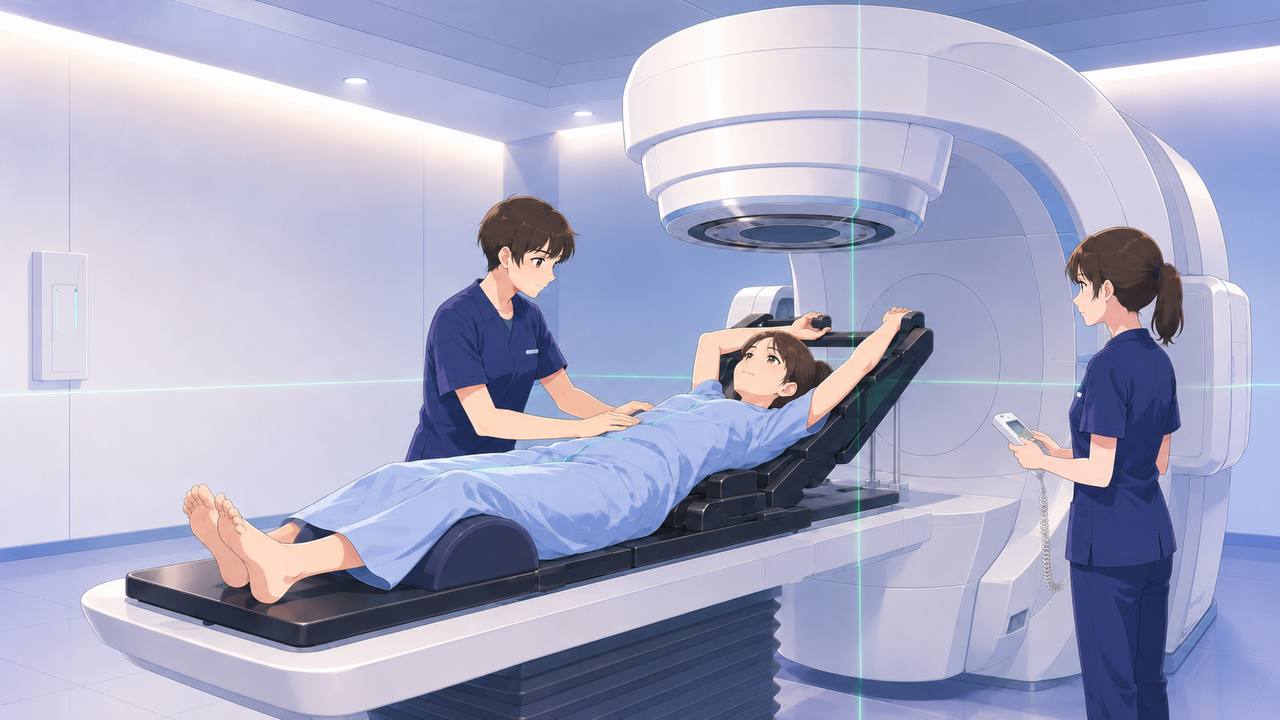
Image-guided positioning
Before the beam turns on, the machine takes images to confirm you are in exactly the right place, and the therapists make tiny couch movements to match your plan to millimeter accuracy.
This step (image guidance) takes a large part of the session time, and it is the reason the treatment is safe and precise.
The treatment moment
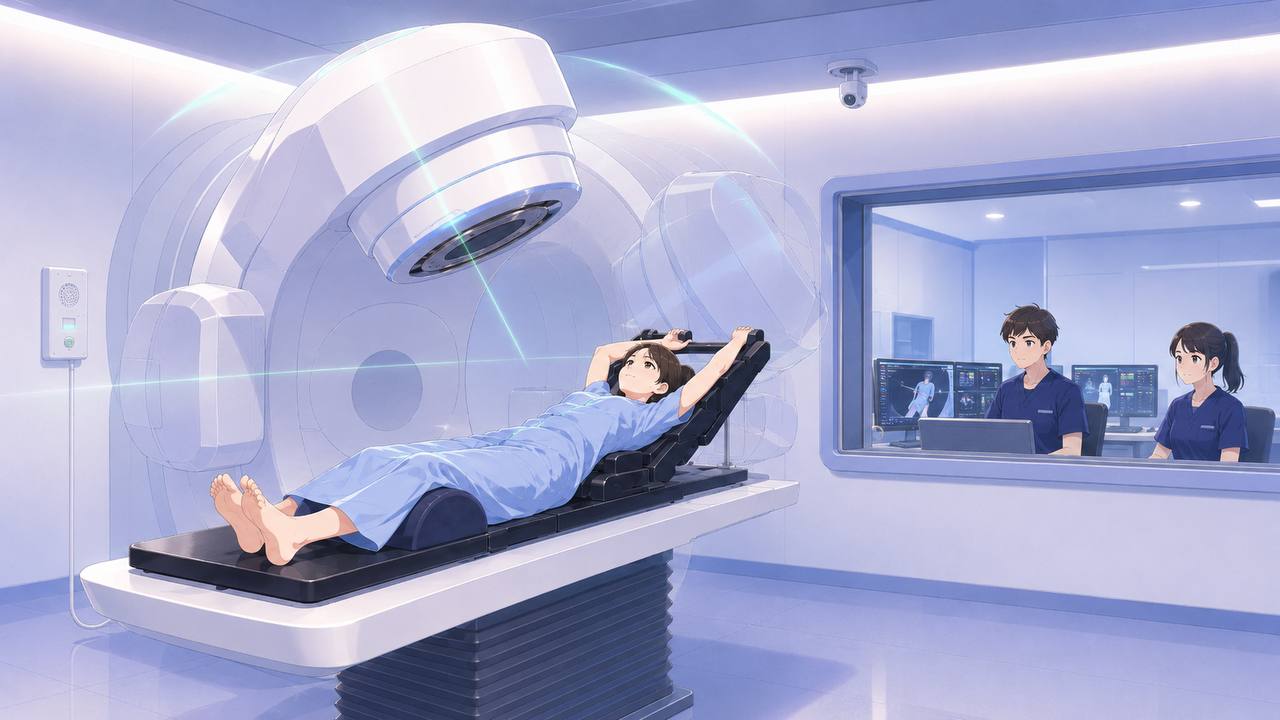
The therapists step out of the room (because they repeat this dozens of times a day) but watch you on camera and audio the whole time. The machine's arm rotates around you to aim radiation from several angles.
You will not see or feel the radiation. All you hear is a soft humming from the machine as it works. The actual beam takes only a few minutes.
Your only job: lie calmly and breathe normally. If you need anything, raise your hand or call out and everything stops immediately.
After the session and your daily life
External beam radiotherapy does not leave radiation in your body after the session, and you can usually be around your family and children safely. If your treatment is internal or uses radioactive medicine, your team will give you special instructions. Most patients can continue many of their daily activities.
Driving and work depend on your condition, the treatment site, your symptoms, and your medications. Some situations — such as brain tumors, seizures, dizziness, visual symptoms, weakness, or sedating medications — can affect driving, so ask your team what is right for you.
Keep gentle skin care over the treated area, stay hydrated, and keep up your nutrition. Your team will tell you any instructions specific to your case.
Fatigue that builds up as the weeks progress is common — rest when you need to, without stopping your activity completely.
Common fears… and the facts
Common fear
“The staff leaving the room means the treatment is dangerous for me”
The fact
The therapists would be exposed dozens of times a day across all patients, so they step away as routine occupational protection. Your own dose is carefully calculated and safe, and they watch you the whole time.
Common fear
“I must isolate from people and stay home throughout treatment”
The fact
With external radiotherapy you can continue your social and working life normally. You may simply need to adjust your pace depending on fatigue.
When to contact us immediately
- A fever during your treatment period
- New severe pain not relieved by your usual painkillers
- Severe difficulty swallowing or breathing
- Severe, ongoing vomiting or diarrhea that stops you drinking fluids
- Severe ulceration or bleeding in the treated area
If any of these appear, contact your treatment team immediately or go to the emergency department.
Important notice
This platform is for explanation and education only and does not replace medical advice. Your treating physician is the final source of truth for your condition and treatment plan. Do not make any treatment decision based on this content alone.